
Radclyffe Hall knew about wealth and privilege. Author of the ground-breaking 1920s lesbian novel “The Well of Loneliness”, she grew up on an English country estate and inherited a fortune that let her live independently of a spouse or a need to work. Hall also knew about despair. Her mother disliked her for not being a boy, her father left when she was two, and she had a same-sex attraction that, if known about, could drive her into social exile.
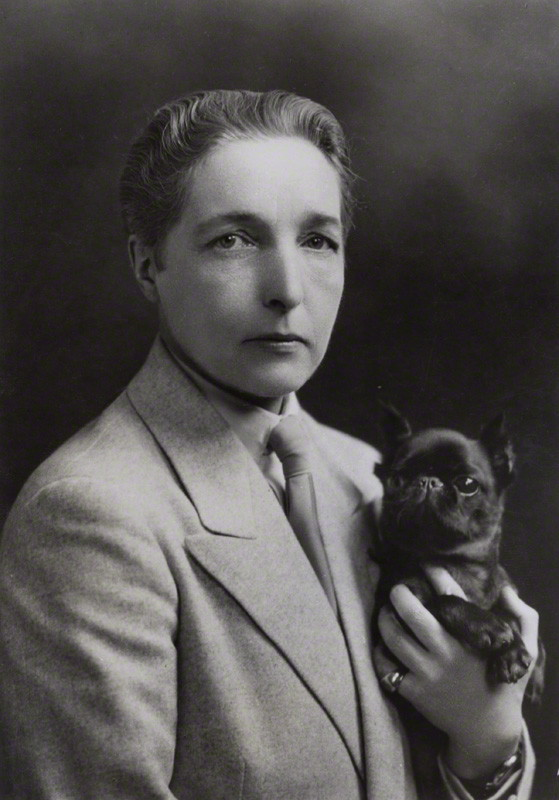
Radclyffe Hall, author of “The Well of Loneliness”, one of the the first novels to look at the plight of homosexuals in a candid, compassionate light.
Despite these struggles, Hall became a successful author and gained a social circle of celebrated artists and “inverts”—those, like her, whose sexual desires were opposite from the norm. The term gained currency in the 1920s due to an emerging interest in human sexual variation and societal changes—a new frankness about sex, Sigmund Freud’s psychological theories, a revolution in manners and morals, World War I’s loosening of gender roles—sweeping the West. The effects of these developments spilled into popular culture, as in the song, “Masculine Women! Feminine Men!”
““…Masculine women, feminine men
Which is the rooster, which is the hen?
It’s hard to tell ‘em apart today!
“Now, wifey is playing billiards and pool
Hubby is dressing the kiddies for school
It’s hard to tell ‘em apart today…””
Performing arts fans had bigger surprises. With movies—“Different From the Others”, for instance—that broached the once forbidden topic of same-sex love, and with Edward Bourdet’s “The Captive”, the first play with clearly lesbian characters to be staged in America. But it is drag performance that is most evocative of the decade’s taboo smashing spirit. Cross-dressing headliners such as Gladys Bentley and Jean Malin played to packed audiences, luring middle-class whites to poor or red-light districts (“slumming”) to stretch their cultural vistas and gawk at radical entertainments not found in their own backyards.
Yet, the Jazz Age’s ballyhooed freedom had its limits. While Prohibition’s speakeasies ushered in all classes, genders, ethnicities, and races to drink on an equal basis, they also made sitting ducks of patrons of same sex bars. Homosexuality was a crime at the time. To be caught in a police raid in an illegal bar with only men or only women, where the patrons held hands and danced, was an offense not easily erased. Clienteles were exposed as “degenerates”, and faced social ruin if word of their arrest got out. Sometimes bar owners trapped their patrons in police raids for the opportunity to lend money for bail.
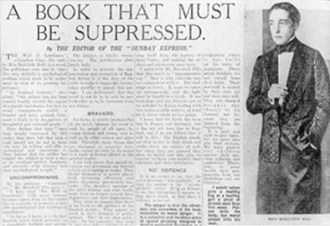
“The Well of Loneliness” was the subject of an obscenity trial in England, the outcome of which was the banning of the book until 1949.
One could imagine the isolation and loneliness of being caught in such a scenario. It’s the kind of agony Radclyffe Hall details in “The Well of Loneliness” with the ring of truth of the person who understands the invert’s dilemma. “Bombs”, she writes, “do not trouble the nerves of the invert, but rather that terrible silent bombardment from the batteries of God’s good people.”
With Hall and others like her determined to bring attention to the plight of the “invert” It would only be a matter of time before gays would have a place to be themselves, and the Weimar Republic was it. Germany’s fledgling constitutional republic would astonish the world with its acceptance of same sex love during the interwar years. Berlin became a “queer haven”, boasting 40 to 100 gay nightclubs and at least one lesbian bar, “The Monocle”. Societies formed to advocate for gay liberation and dissolving of the dread Paragraph 175 of the German penal code that rendered homosexual acts between men to be criminal.
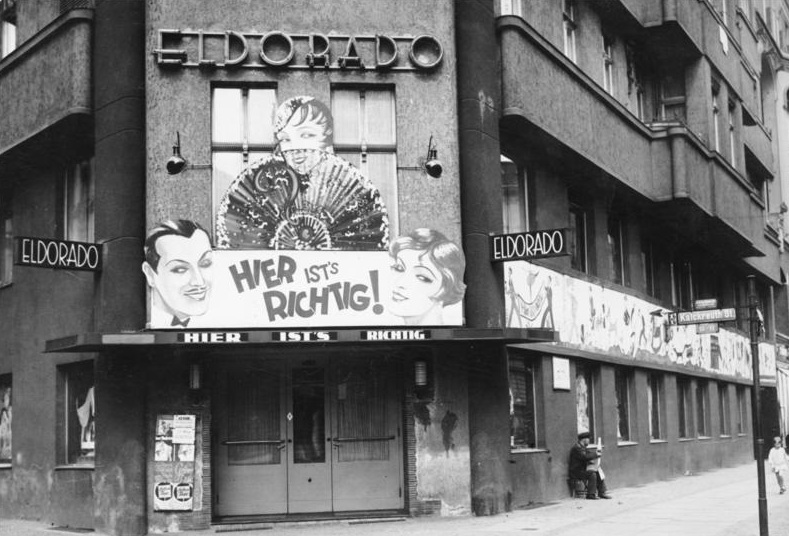
The El Dorado cabaret in Berlin. During the Weimarr Republic the city hosted from 40 to 100 clubs where homosexuals were welcomed.
Which is not to say the campaign for tolerance was a smooth ride. Gay rights groups merged and dissolved on a dime, clashing over theories of homosexuality, the age of consent, modern science, woman’s emancipation and myriad other issues. The “Community of Free Spirits”, founded by Adolf Brand in 1903, promoted a form of love between men based on the Greek model. Magnus Hirschfeld’s Scientific-Humanitarian Committee, on the other hand, looked at same-sex attraction as a scientific phenomenon. He considered homosexuality a simple variation on nature, manifesting a virtual “third sex”. Both groups would dissolve with the rise of Naziism.
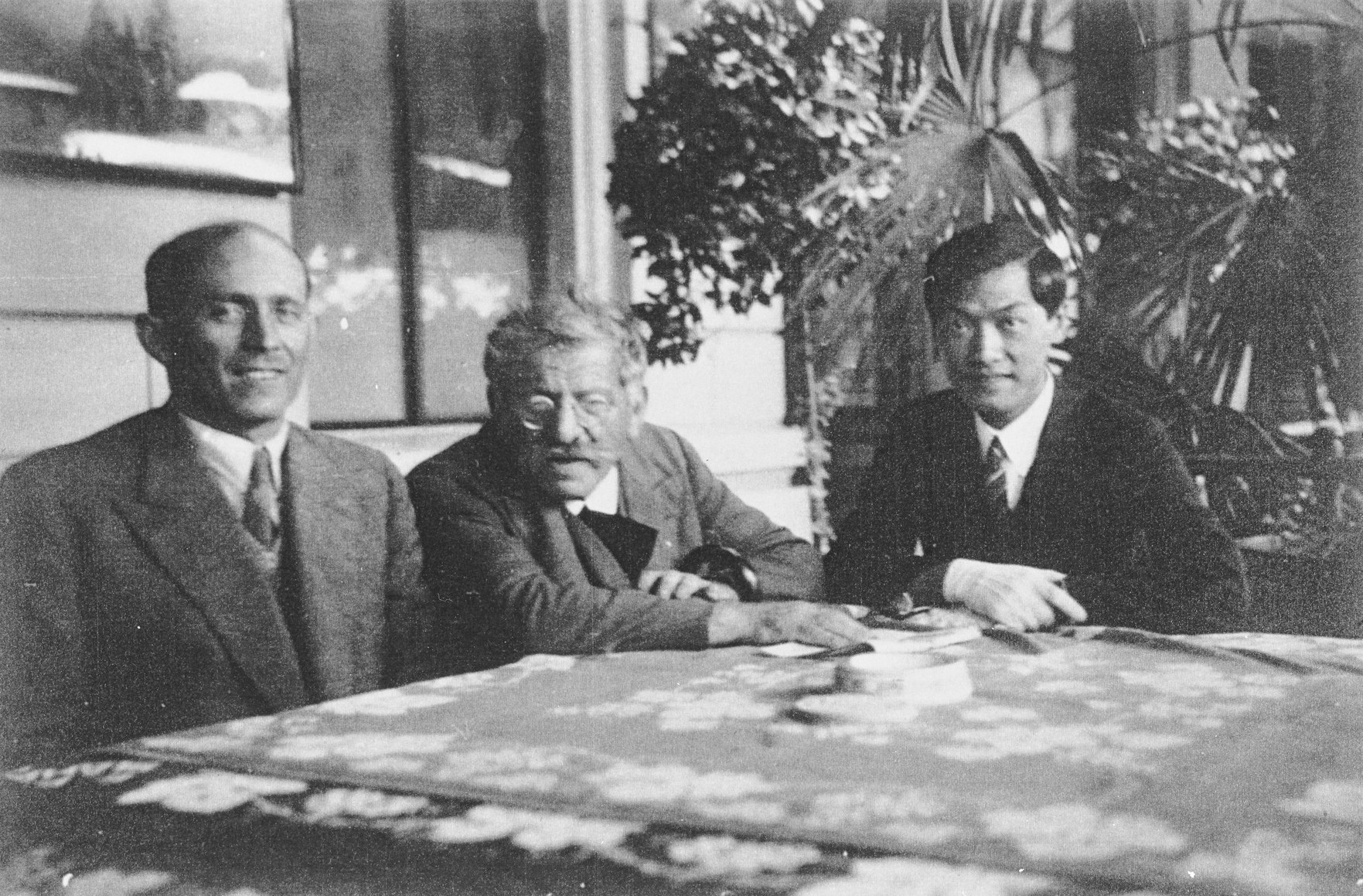
Magnus Hirschfeld (center) founded the Scientific-Humanitarian Committee, lauded as the first advocate of human rights for sexual minorities.
Only one gay rights advocacy group is recorded as existing in the United States during 1920s. It’s founder was Henry Gerber, and it was known as the Society for Human Rights (SHR).Unfortunately, adherents were lukewarm in their ardor for the cause, refusing to subscribe to the group’s newsletter for fear their sexual inclinations would be traced. Finally, the wife of a member reported them to the police, and the SHR was disbanded. It would be decades before gay liberation was again a priority in the eyes of reform-minded activists the way it had been in the 1920s.