
They Didn’t Get There Overnight
“Ladies, you will never know how much joy you can have, until you...smash, smash, smash.”
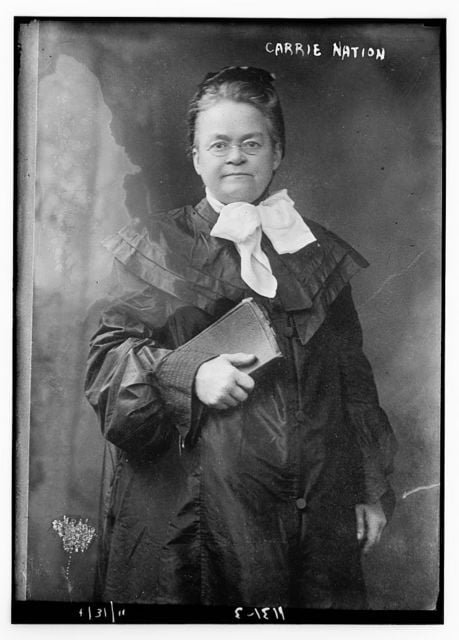
Carrie Nation, a temperance crusader whose antics-which included smashing liquor receptaacles inside saloons-won her the nickname “Hatchet Granny”
These are the words of Carries Nation, and if you do not know who Carrie Nation is, you can never understand how Probhition became law of the land in the United States from its passage in 1919 to its repeal in 1933. Nation and others like her fought to ban alcohol to end drinking-fueled social ills—poverty, domestic violence, joblessness, and poor health outcomes, to name a few—in a movement active until 1919, the year Congress ratified a National Prohibition on the sale and manufacture of alcohol.
The roots of the nation’s struggle with drink stretches back to when Europeans first set foot in North America. Colonial history tells us there were efforts to staunch alcohol use from Detroit to Staten Island, from the South to New England, including efforts to prevent it being traded to Native Americans. By 1789, Connecticut had a temperance group to ban Whiskey sales. By 1818, 8 of the 20 American states had Temperance Associations.
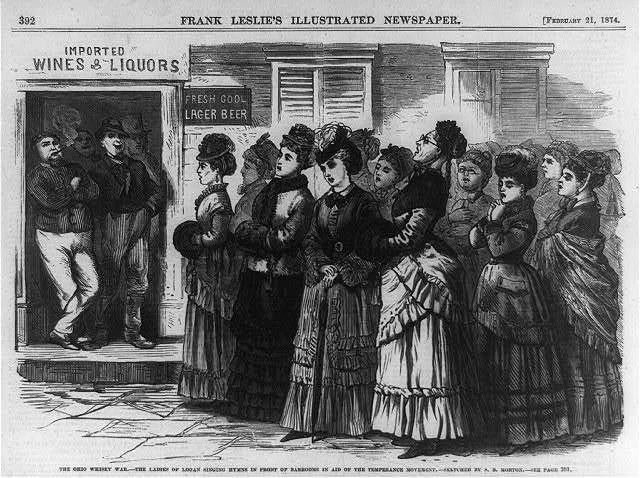
The temperance movement was known as “the Woman’s Crusade” because so many wives and mothers were counted in its ranks. Here we see a temperance vigil outside a saloon.
Fast forward to the mid-19th century, when tripping over a drunk on a city street was not unusual. Life was punctuated by toasts and toddies, wine aperitifs and shots of rum, whiskey, and rye. Glasses were raised to celebrate both business and social events, and employers offered workers intoxicating beverages to hasten 12 to 16 hour workdays. The saloon—the primary place where alcohol was sold—was a bastion of male privilege where reliance on drink was encouraged. Prohibited from these dens of exclusivity were women, who were powerless without the vote to brake the often ruinous imbibing of husbands, fathers, and brothers inside the saloons.
Small wonder by 1835 the American Temperance Society numbered 1.5 million and was soon to be joined by other, like-minded groups. The Prohibition Party founded in 1869 would run in the Presidental campaigns of 1888 and 1892 on a prohibition and universal suffrage platform and capture 2% of the vote. That same year, the Woman’s Christian Temperance Union elbowed its way into the fray to advocate a “pure and sober” world and grow quickly nationally and internationally. Twenty years later the Anti-Saloon League was formed, embracing both Catholics and Protestants in its fold. The people in these groups—“Drys”—were participating in the so-called Dry Crusade, marking a chasm between religious morals and clean living on one side and breweries, liquor-dispensing saloons, and immigrant communities on the other.

Temperance and Prohibtion groups made savvy use of the media to promote their cause and provide a voice piece for families devastated by intemperate alcohol use.
Small wonder by 1835 the American Temperance Society numbered 1.5 million and was soon to be joined by other, like-minded groups. The Prohibition Party founded in 1869 would run in the Presidental campaigns of 1888 and 1892 on a prohibition and universal suffrage platform and capture 2% of the vote. That same year, the Woman’s Christian Temperance Union elbowed its way into the fray to advocate a “pure and sober” world and grow quickly nationally and internationally. Twenty years later the Anti-Saloon League was formed, embracing both Catholics and Protestants in its fold. The people in these groups—“Drys”—were participating in the so-called Dry Crusade, marking a chasm between religious morals and clean living on one side and breweries, liquor-dispensing saloons, and immigrant communities on the other.
Carrie Nation is perhaps the most colorful of the Dry Crusade personalities, known for entering saloons for the distinct purpose of destroying the alcohol inside, initially with what she called “smashers” (rocks and bottles), and then with her trademark hatchet. While her tactics were extreme, the grassroots politics behind them were clearly as intense and committed to driving drink from the nation as Carrie Nation herself. By 1919, there were innumerable localities and many states that entirely banned either consumption or sale of alcohol or both.
Due, in part, to World War I, these local bans were fated to be subsumed by the criminal license and social hypocrisy that would define the National Prohibition era. For propagandists were eager to shut down the breweries closely identified with Germany, the belligerent in that war. For this reason and to save grain for the war effort, the U.S. passed the Wartime Prohibition Act, a temporary measure banning the sale of beverages with more than 1.28% alcohol.
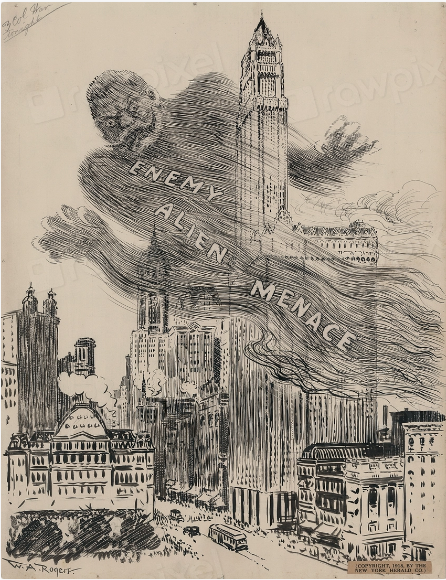
Patriots and propagandists during Worlad War I were intent on closing the breweries that were hallmarks of German culture in the U.S.
By December 1917, a constitutional amendment for a permanent, National Prohibition had been passed by both houses in Congress and subsequently ratified by 36 of the nation’s 48 states at the time. A nationwide ban on the sale, manufacture and transport of alcohol had become law, but was destined to be swept from the Constitution with as much fanfare and more zeal than it took to get there.