
Prohibition on the Jersey Shore
Composed of 130 miles of wide beaches and forested bays, farms, fishing hamlets and a few canneries, it was a landscape occupied mostly by watermen, farmers and fisherman until the end of the 1800s. This was the character of the place we now call the North Jersey Shore. New Yorkers established some towns there to escape city life, and it became a popular vacation destination, but the “Shore” was a remote boondocks compared to the cities—New York, Philadelphia, Newark—closely surrounding it. Until, of course, the Eighteenth Amendment became law. Once Prohibition passed, it became clear the vast swathe of land on New Jersey’s ocean perimeter was ideally suited for smuggling the liquor that obsessed Americans as soon as its sale, manufacture and transport became illegal.
Only a blaring sin of omission could have stopped the underworlds in vicinity of the “Shore” from exploiting the Golden Egg in their reach.
Only a blaring sin of omission could have stopped the underworlds in vicinity of the “Shore” from exploiting the Golden Egg in their reach. New York alone had an estimated 50,000 speakeasies, filled with thirsty clientele happy to scorn the unpopular Eighteenth Amendment.
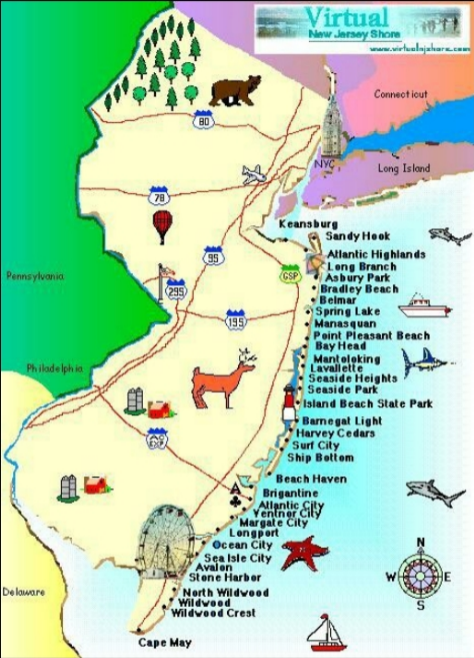
Map of the Jersey Shore
A NY Times reporter claimed on a single night of Prohibition hundreds of North Jersey Shore points were appropriated to drop off no less than 35,000 cases of illegal booze. The illegal trade was so pervasive, the Ku Klux Klan infiltrated the area to make their case against the “foreigners” they claimed were tearing the shoreline apart with the violence and lawlessness of the bootlegging enterprise.
Yet, the calamity that followed passage of the Volstead Act could hardly be placed at the feet of a burgeoning “foreign” criminal underworld. Everyone was breaking the laws ceded by the Eighteenth Amendment, to one degree or another. This included inhabitants of towns like Ocean Grove, Long Branch, Atlantic Highlands and Asbury Park; places conceived as havens of Protestant morality for the “100% Americans” who defined the culture until the ideas of the 1920s shredded the seams of Victorian convention.
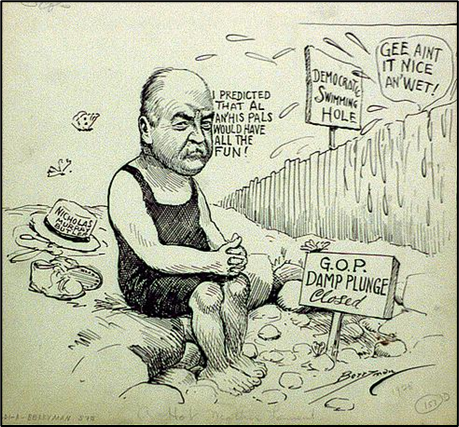
Cartoon showing a Prohibition advocate, compared to Democrats, who held the law in disdain.
Over time, the enormous illegal liquor trade came up against increasing obstacles, more so when the Federal government committed to outpacing the boats that transported the booze to land and to hiring incorrupt agents to fight bootlegging. Unfortunately, once these measures were put in place, criminals and everyday residents alike turned to basement operations and home stills.
Everyone was breaking the laws ceded by the Eighteenth Amendment to one degree or another.
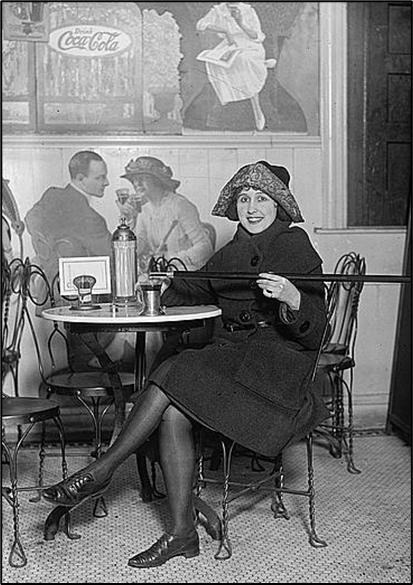
A Walking Stick for Carrying Alcohol
It could be said that anyone who read the newspapers could have seen all of this coming. On the heels of Prohibition’s passage as the law of the land, New Jersey voted in a governor—Democrat Edward I. Edwards—who vowed his state would remain “as wet as the Atlantic Ocean”. Before and after the law’s passage, a coalition of working-class Jerseyans, tourist-oriented businesses, and liquor merchants threatened to oppose the amendment.
The tug-of-war that followed meant that, along with every other change wrought by the 1920s—a decade called Roaring for good reason—North Jersey Shore residents were in for a wild ride. Wild is exactly how it got, with the decade roaring so tempestuously for the “Shore” and its people we can still hear the echoes today.